
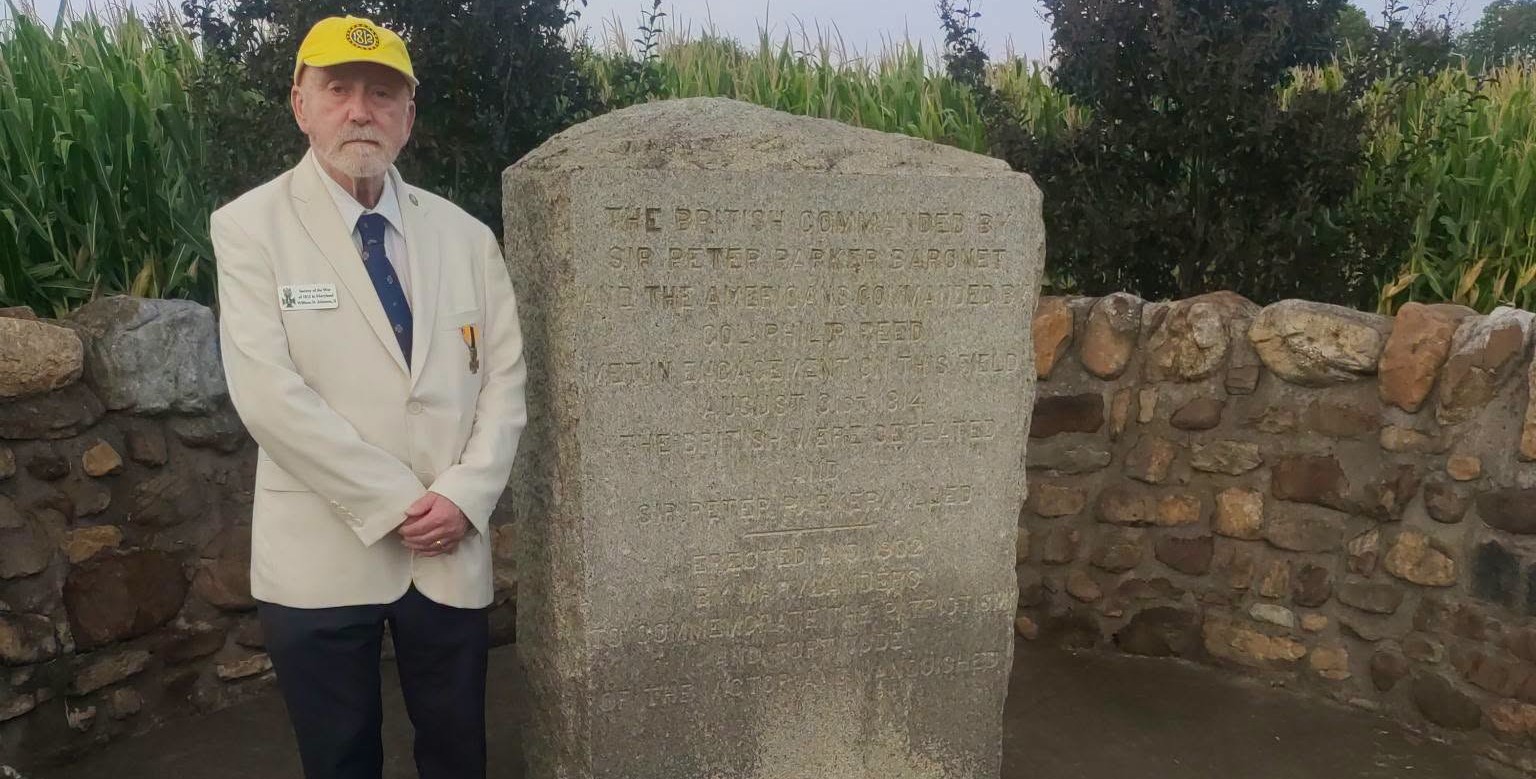
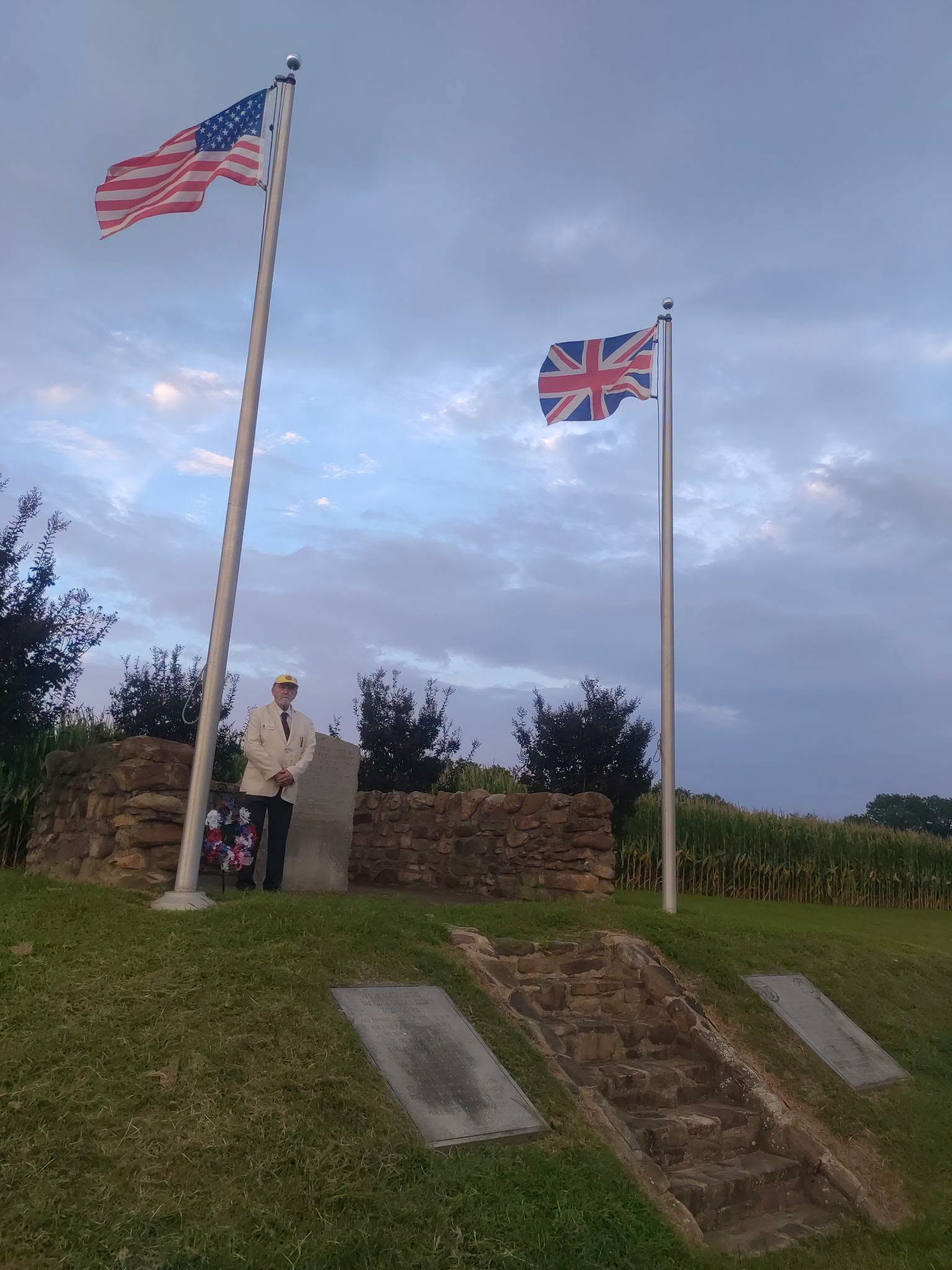
William D. Johnson II, the Society’s 2nd Vice President, represented the Society at the Battle of Caulk’s Field ceremony on Sunday, August 30, 2026, at the Caulk’s Field memorial in Kent County, Maryland. The service is held on the battlefield itself, which is still farmland, and the American and British colors fly over it together.
The fight it remembers began on the night of August 30, 1814. A landing party of Royal Navy sailors and Royal Marines came ashore from HMS Menelaus under Captain Sir Peter Parker, meaning to surprise the Maryland militia camped nearby. Lieutenant Colonel Philip Reed of the 21st Regiment of Maryland Militia, with about two hundred men, drew his line up at Isaac Caulk’s farm and waited for them. A full moon showed the British coming on, and the fighting carried past midnight into the early hours of August 31.
Parker was hit in the thigh and bled to death on the field. His men carried his body back to the boats and the landing party withdrew to the ship, leaving Reed holding the ground. Accounts of the British loss give fourteen killed and twenty-seven wounded. Three Americans were wounded and not one was killed. American reports of the time say about a dozen British dead were buried on the field; where, nobody now knows.
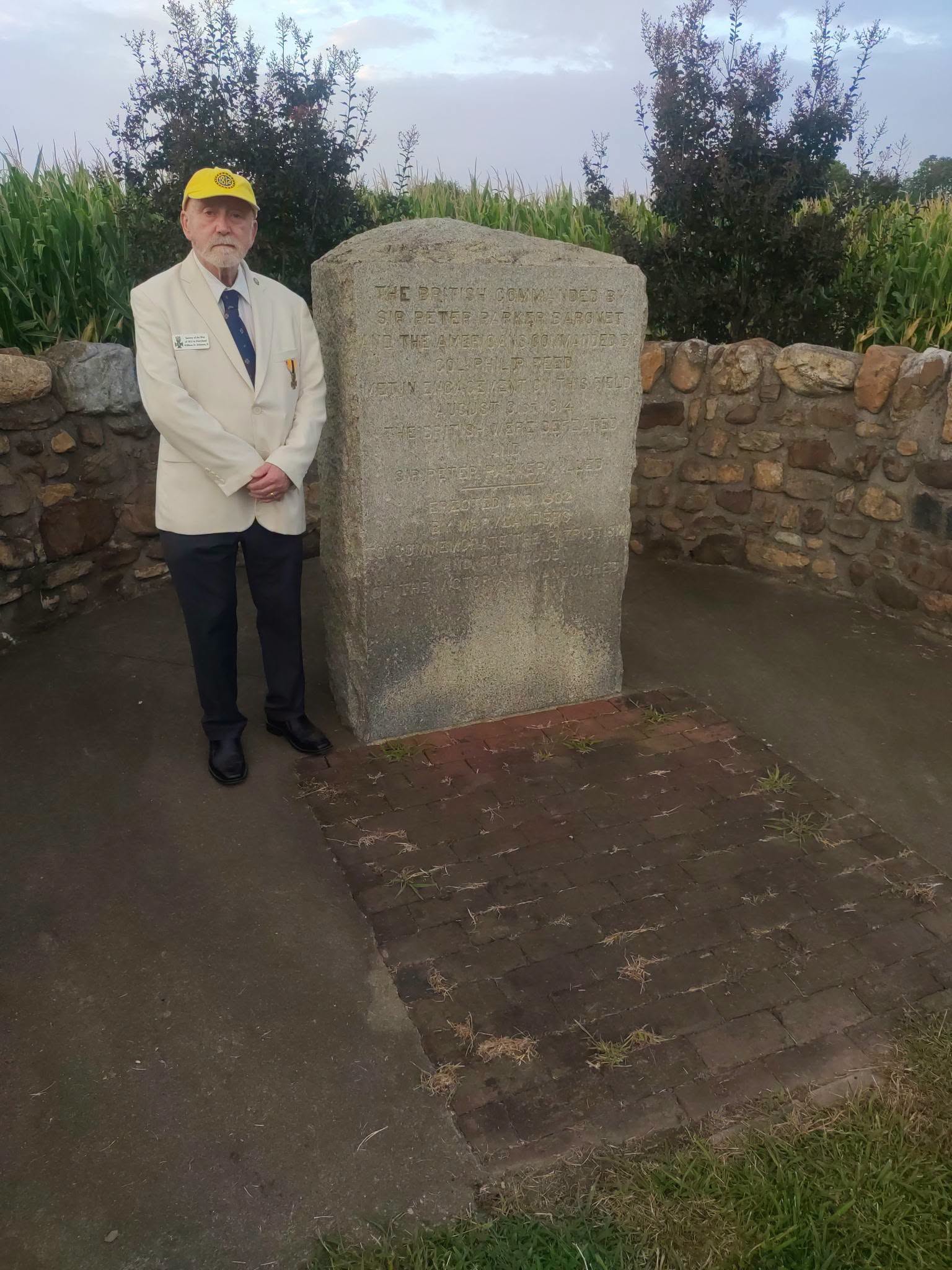
The granite monument was raised in 1902. It records that the two commanders “met in engagement on this field” on August 31, 1814, that the British were defeated, and that Sir Peter Parker was killed. The lettering is worn now and reads best in a low sun.
Caulk’s Field is one of the best-preserved War of 1812 battlefields in Maryland, which is to say the ground has been farmed rather than built on. It is a small action beside Bladensburg or North Point, and it was a clear American victory in a season that had few of them.