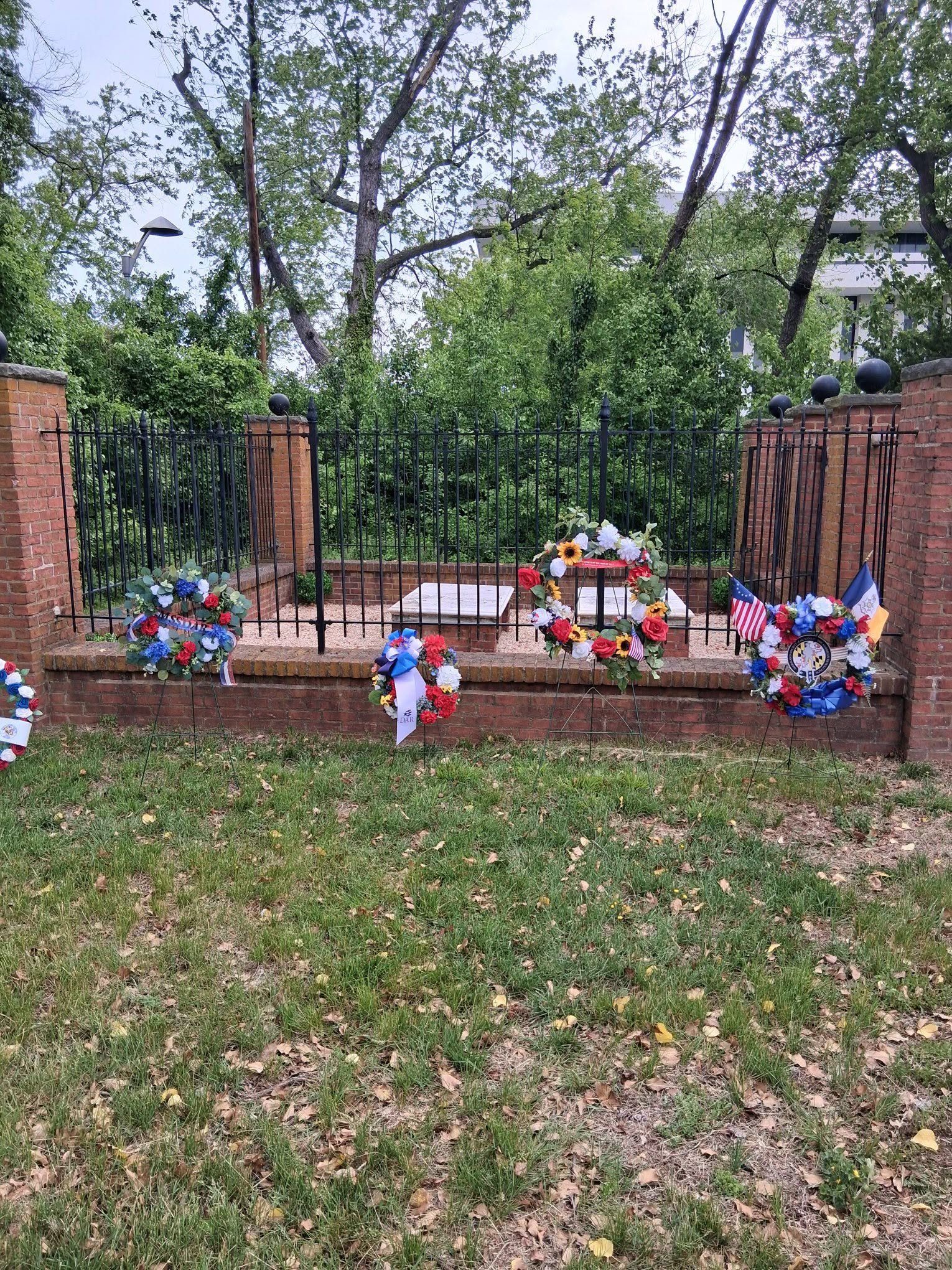
The Society joined the John Hanson Chapter of the Maryland Society of the Sons of the American Revolution and the Daughters of the American Revolution at ten o’clock on Saturday, May 2, 2026, on Governor Oden Bowie Drive in Upper Marlboro, for a Patriot Grave Marking Ceremony at the grave of Dr. William Beanes. He is marked as a patriot of two wars, which is the plainest way to say what he was.
Beanes is the reason there is a Star-Spangled Banner, which is a large claim for a country doctor and a true one.
He was born at Croom in Prince George’s County on January 24, 1749, and learned medicine from a local physician, there being no medical college in the colonies to go to. When the Revolution came, he gave his services at the general hospital in Philadelphia, cared for the wounded after Brandywine and Long Island, and was at Valley Forge through that winter. He settled afterwards at Upper Marlboro, and in 1799, with John and Thomas Archer, he helped found the Medical and Chirurgical Faculty of Maryland, which is the state medical society to this day.
In August 1814, the British army came through Upper Marlboro on its way to Bladensburg and the burning of Washington, and again on the way back. Beanes, by then sixty-five, helped round up British stragglers who were plundering farms and had them put in the county jail. One of them got away and reached the fleet. General Ross sent a party back for him in the night and carried him off to the flagship, HMS Tonnant, meaning to send him to Halifax for trial.
His neighbors went looking for somebody who could get him out. That somebody was a Georgetown lawyer named Francis Scott Key, who went down to Baltimore and sailed with Colonel John Stuart Skinner, the American agent for prisoner exchange, to find the fleet in the Chesapeake. On the way, Key gathered letters from British wounded who were being cared for by American surgeons at Bladensburg. Ross read them and agreed to let the old doctor go, and by his own account for that reason and no other.
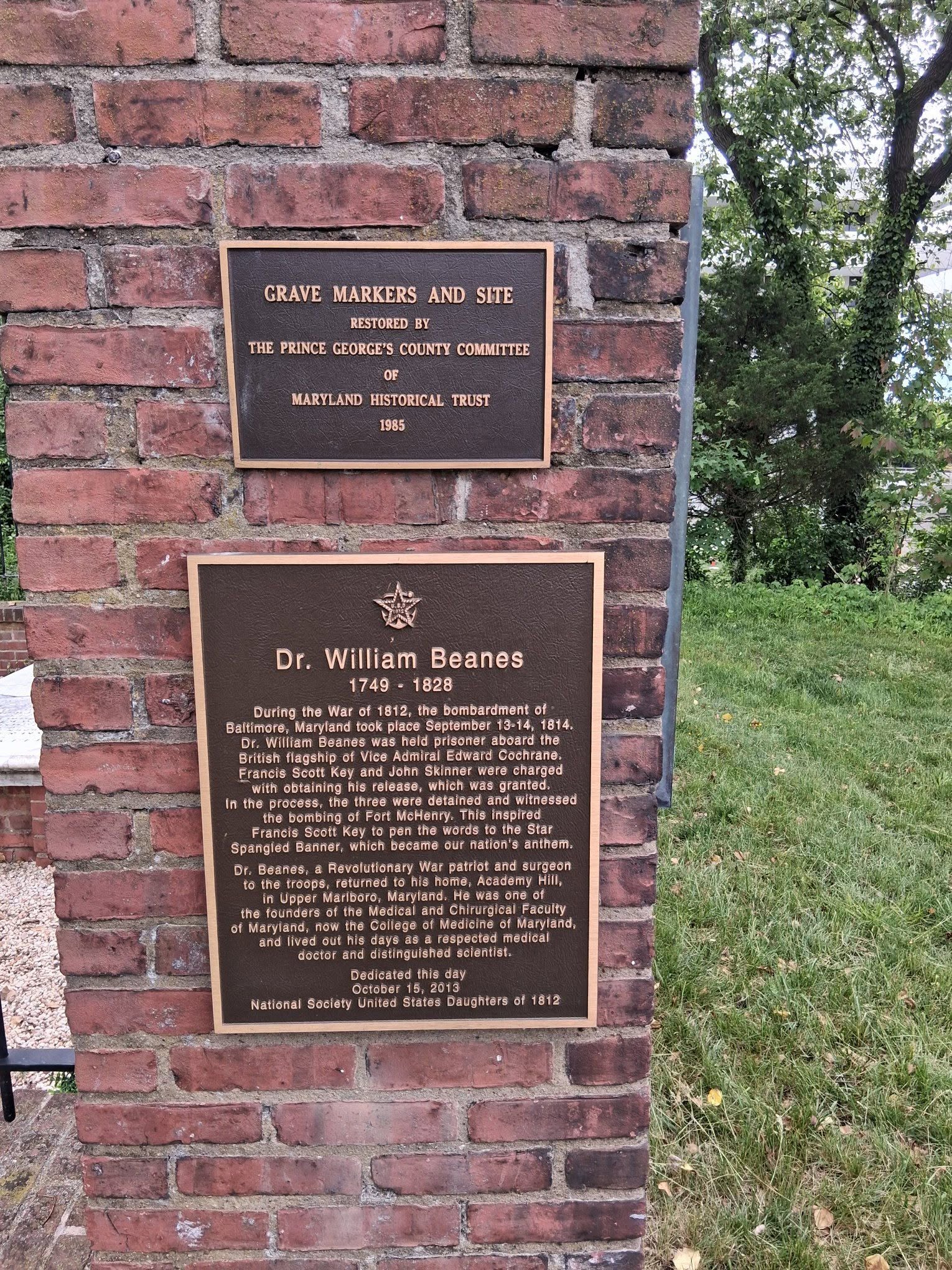
None of the three was allowed to leave. The officers had talked about the attack on Baltimore in front of them, so they were kept with the fleet, aboard their own vessel under guard, while the bombardment of Fort McHenry went on through September 13 and 14, 1814. Key watched it from the water and wrote the verses that came of it. The country has been singing them ever since, and the man the whole errand was for went quietly home to Upper Marlboro.
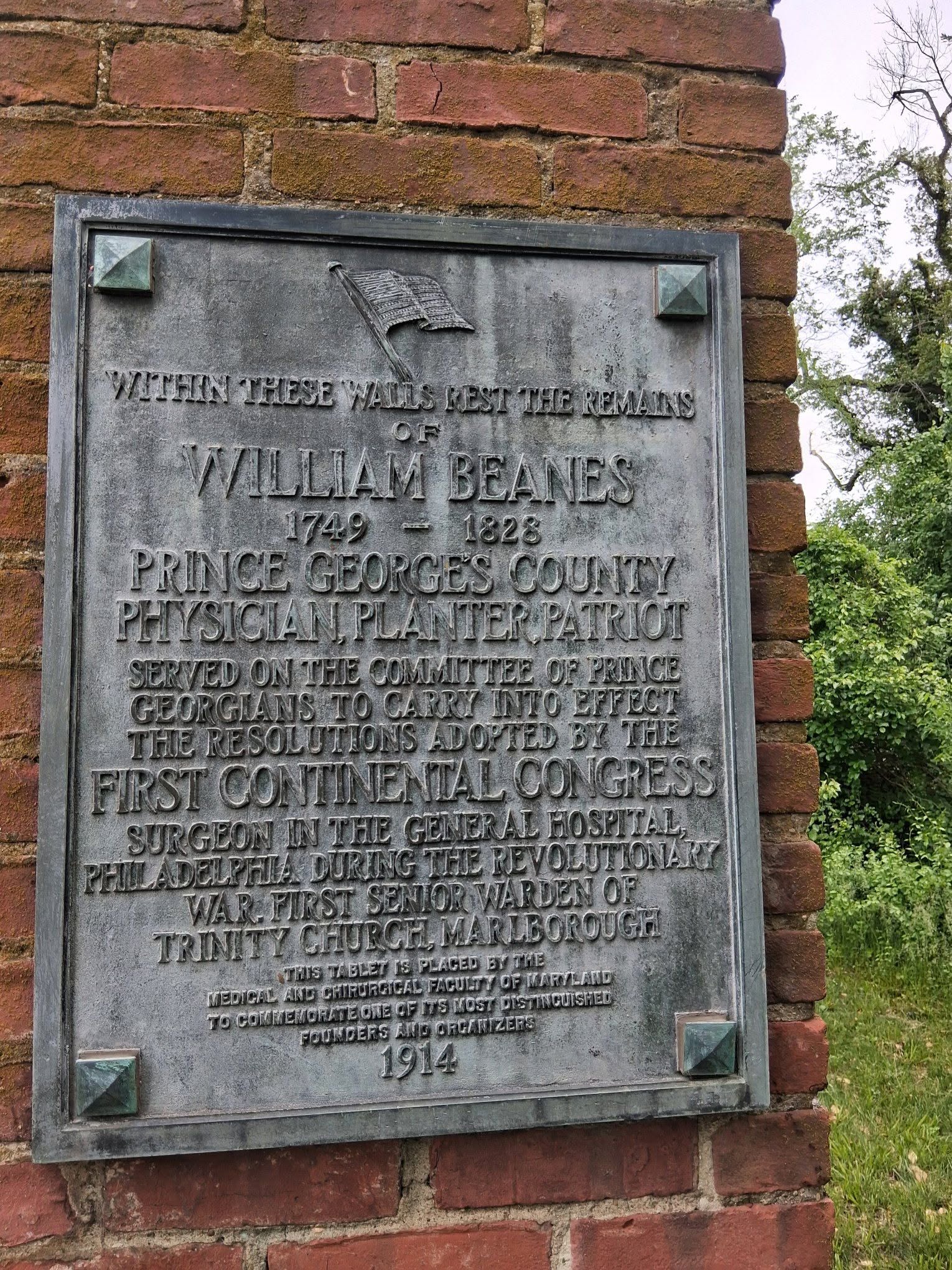
He lived there until his death on October 12, 1828, and he lies in the walled plot where the wreaths were set. The Medical and Chirurgical Faculty put up a bronze tablet to him in 1914, calling him physician, planter and patriot, and recording that he served on the committee of Prince Georgians charged with carrying out the resolutions of the First Continental Congress. The grave markers and the site were restored in 1985, and the Daughters of 1812 added the plaque that tells the 1814 story in 2013.
It is fitting that the Sons of the American Revolution and this Society should stand at that wall together. Beanes belongs to both wars, and the grave of a man who served in one and was carried off in the other is the right place for two societies to meet.