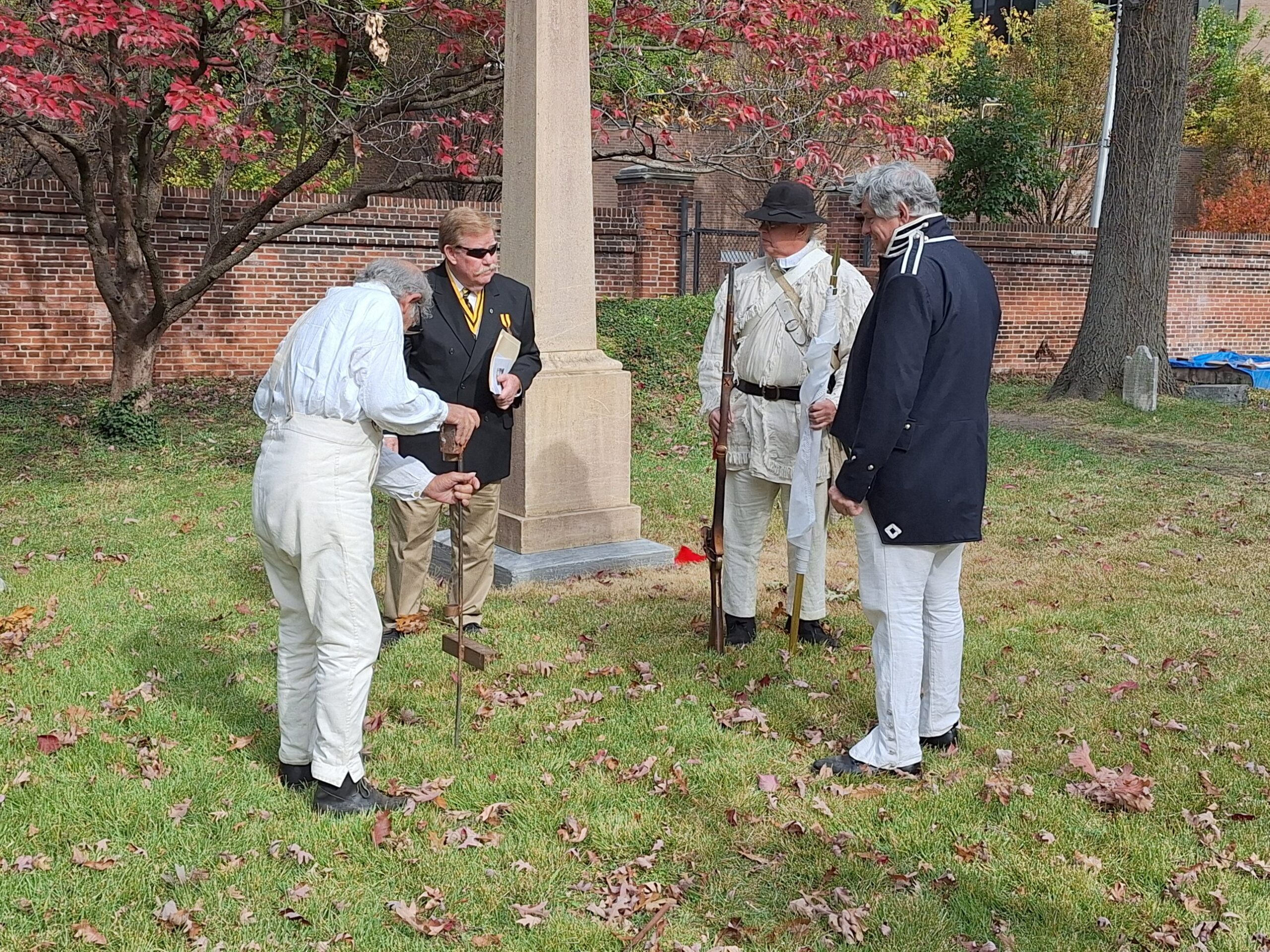
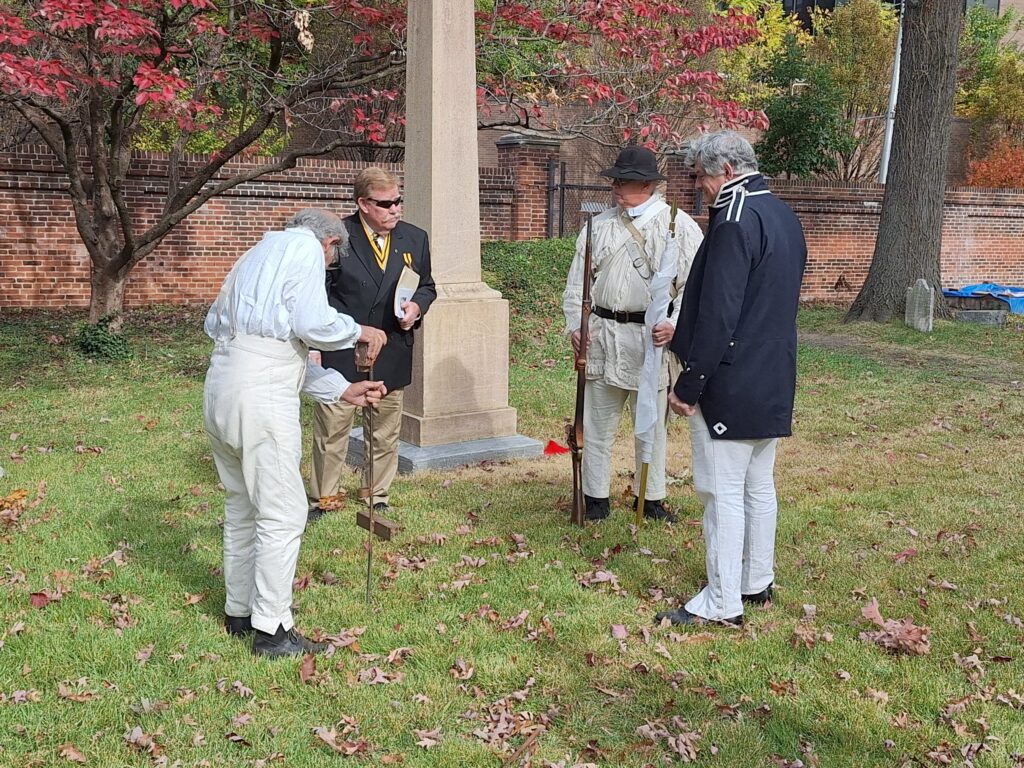
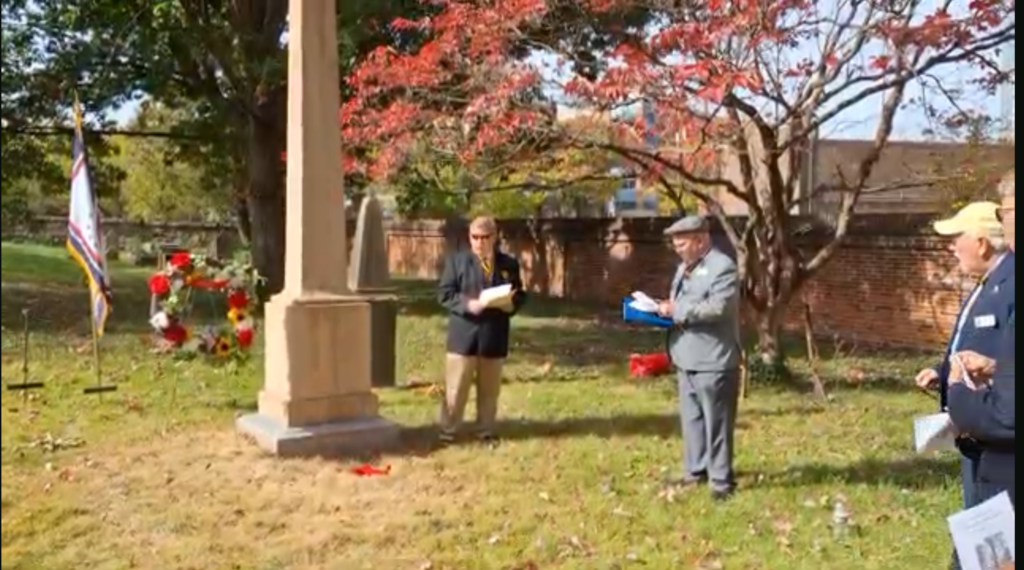
Members of the Society gathered at Old St. Paul’s Cemetery in Baltimore on Sunday, November 1, 2026, to honor two veterans of the War of 1812, Upton Scott Heath and Richard Key Heath. The brothers both served at the Battle of North Point, both were cousins of Francis Scott Key, and both lie in this ground.
They were two of the Baltimore men who turned out when the British landed at North Point on September 12, 1814, and stood in the line that met the advance on the road to the city. What that day bought was time: the attack on Baltimore by land was checked, and the bombardment of Fort McHenry that followed through the next night failed to open the harbor.
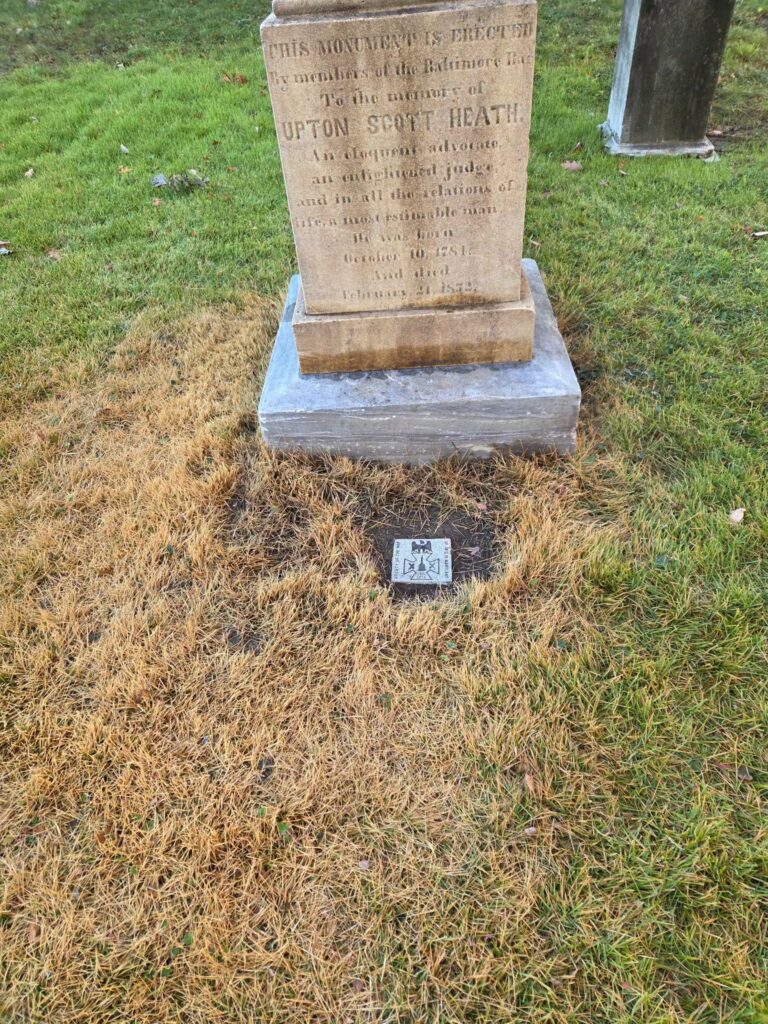
Upton Scott Heath was a lawyer and a judge, and his monument was raised by his colleagues rather than by his family. The inscription records that it was erected “by members of the Baltimore Bar” to the memory of “an eloquent advocate, an enlightened judge, and in all the relations of life, a most estimable man”. He was born October 10, 1781, and died February 21, 1852, at seventy.
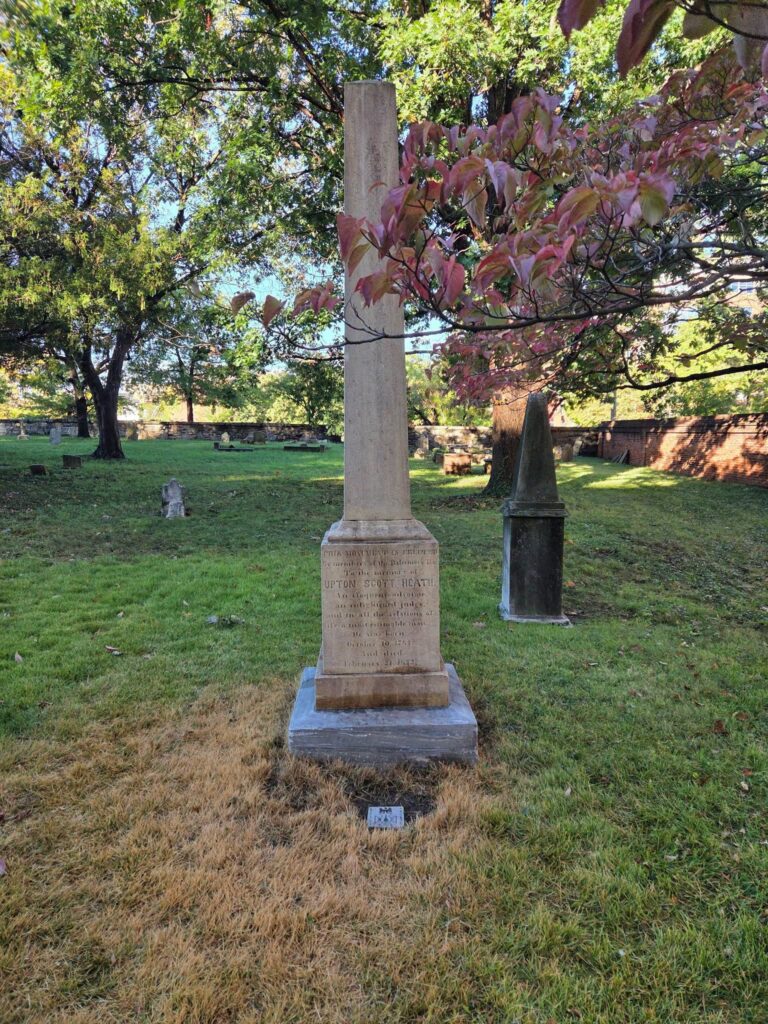
The Society’s marker is a small one, set flush in the turf at the foot of the stone, carrying the cross and eagle of the Society of the War of 1812 in the State of Maryland. It is the Society’s standing work: finding where the Defenders lie, and saying so on the ground, so that a visitor who comes upon the grave knows what the man did.
A wreath was laid, the Society’s own members stood in the uniform of 1814, and the service was read beside the monument.
More than 130 veterans of the War of 1812 lie at Old St. Paul’s, among them Lt. Col. George Armistead, who commanded Fort McHenry through the bombardment. The Society’s graves database records the Maryland men of the war and where they are buried, and the Grave Marking Committee works through it a stone at a time.